
In this article, I’d like to introduce my MAID-RITE washboard made by the Columbus Washboard Company and show how I customized it.
After several modifications, my washboard is finally complete, so I’d like to share the results.
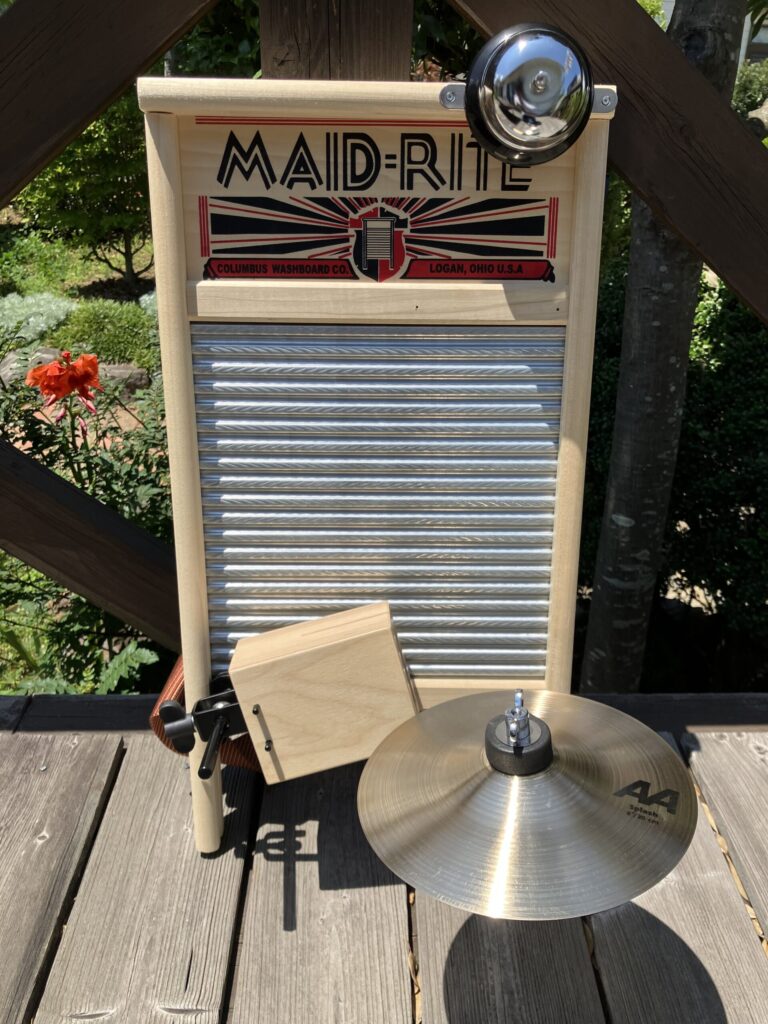
| Parts | Use |
|---|---|
| A call bell | Classic Sound |
| Temple Block | Wood percussion |
| SABIAN AA Splash 8 | Cymbal |
| PCBH cowbell holder | Fixture |
Contents
About Washboard
A washboard is not only a household tool but also a versatile percussion instrument. In the 1920s, musicians began using everyday household items as musical instruments. That was how the washboard became a percussion instrument.
As automatic washing machines became more common, many washboard manufacturers went out of business. However, the Columbus Washboard Company still has been producing thier washboards, and many percussionists still enjoy playing the washboard today.
You can watch the video on YouTube about intorduction Columbus Washboard Company, and The annual Washboard Music Festival. Here is the Columbus Washboard Company Home page.
The video below is one of my favorite washboard videos. His mother use his instrument as a washboard.
How I Customized My Columbus Washboard
The percussions are as follows.
- A call bell
- Meinl Percussion Wood Temple Block, C6 (TMWB-S)
- SABIAN AA SPLASH 8
Also there are some attachments, so I’m going to show more detailes.
A call bell
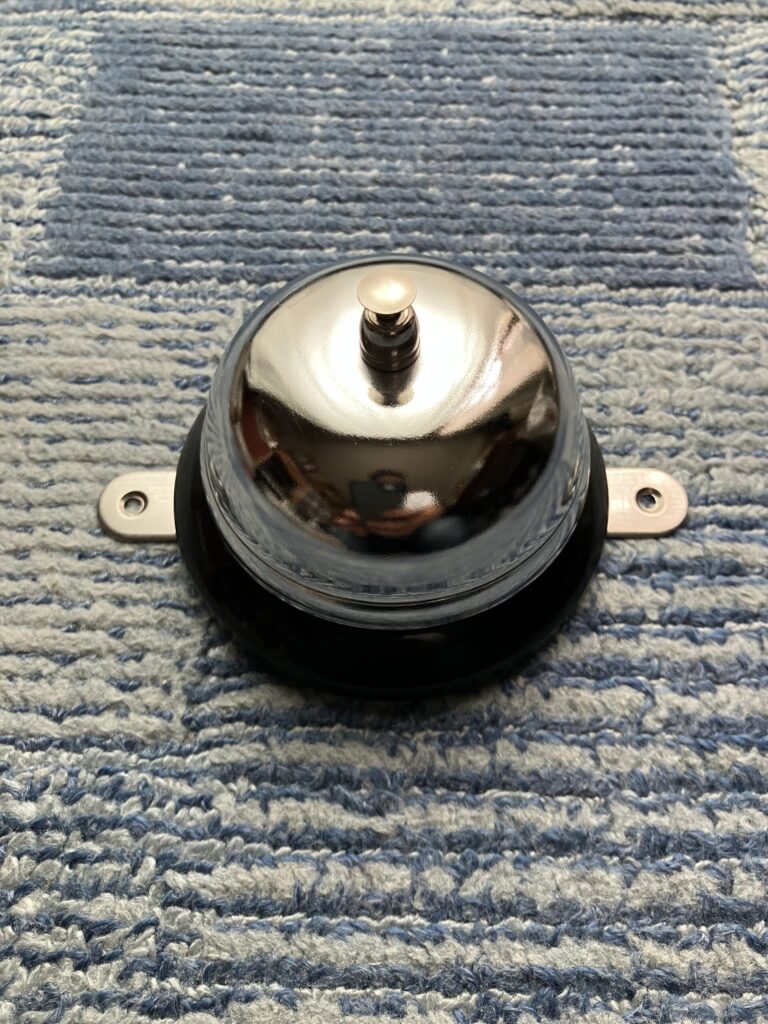
I bought the the call bell on Amazon. There are many call bells available on Amazon, but I don’t know the difference. I think this is a fairly standard-sized call bell. If the smaller one, I would like to try it in the future.
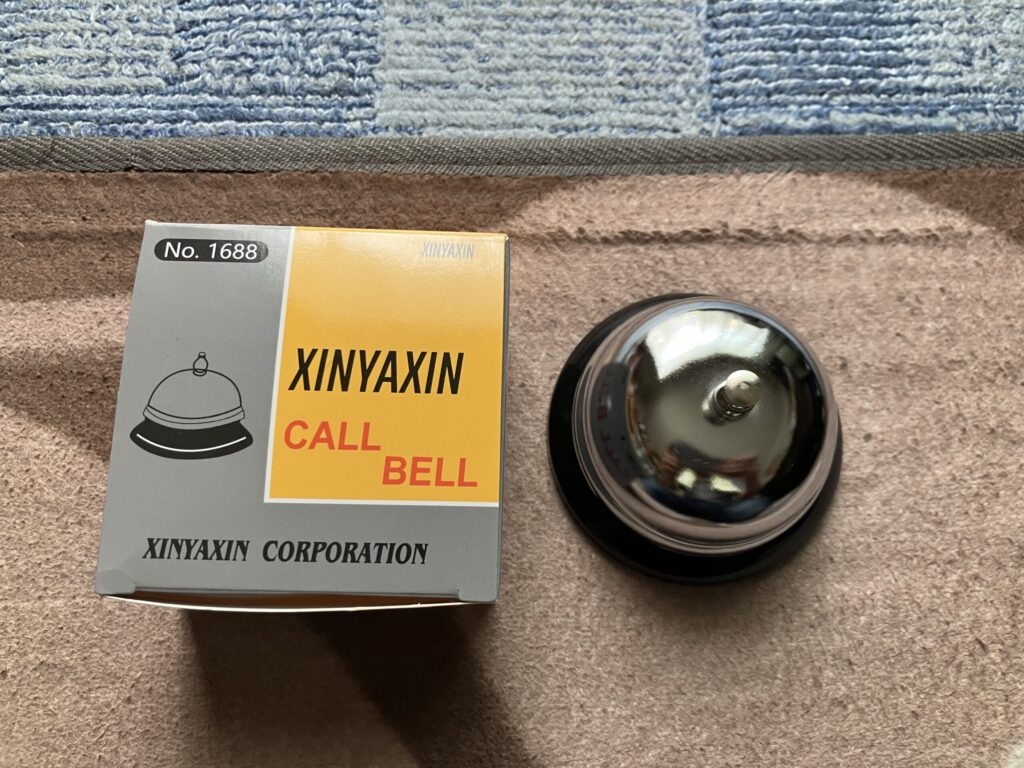
I think many washboard player usually make a hole in a call bell and attach to the washboard. However, it felt like too much work so I bought a metal plate, screw, some mounting bases, and tie wraps.
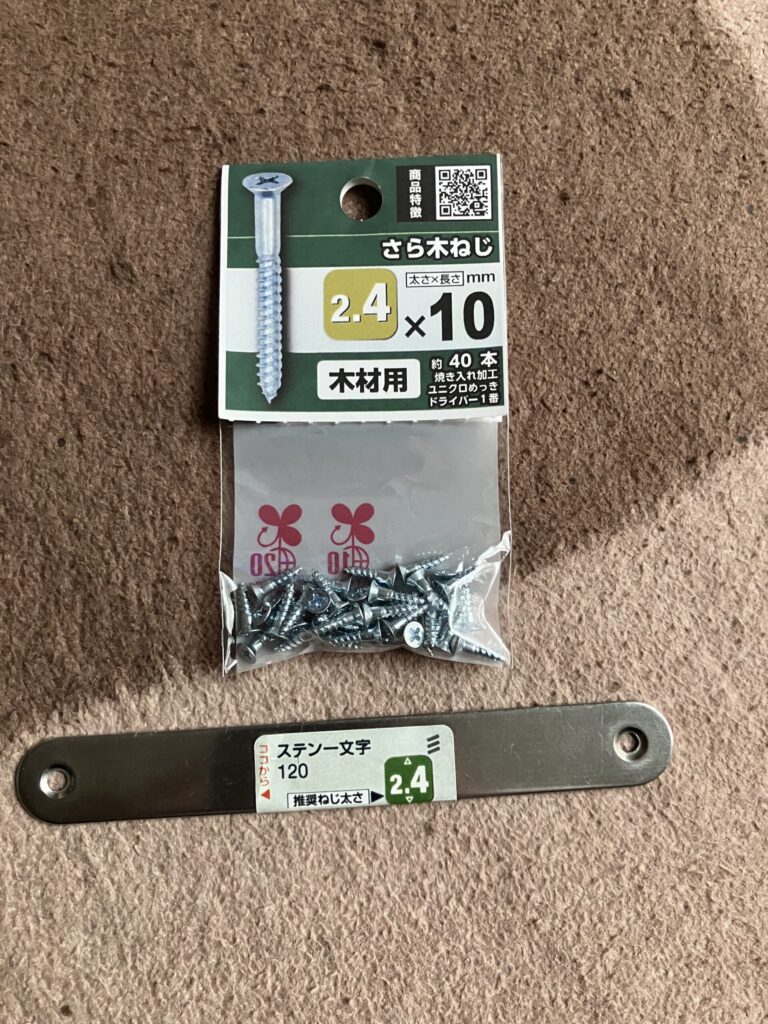
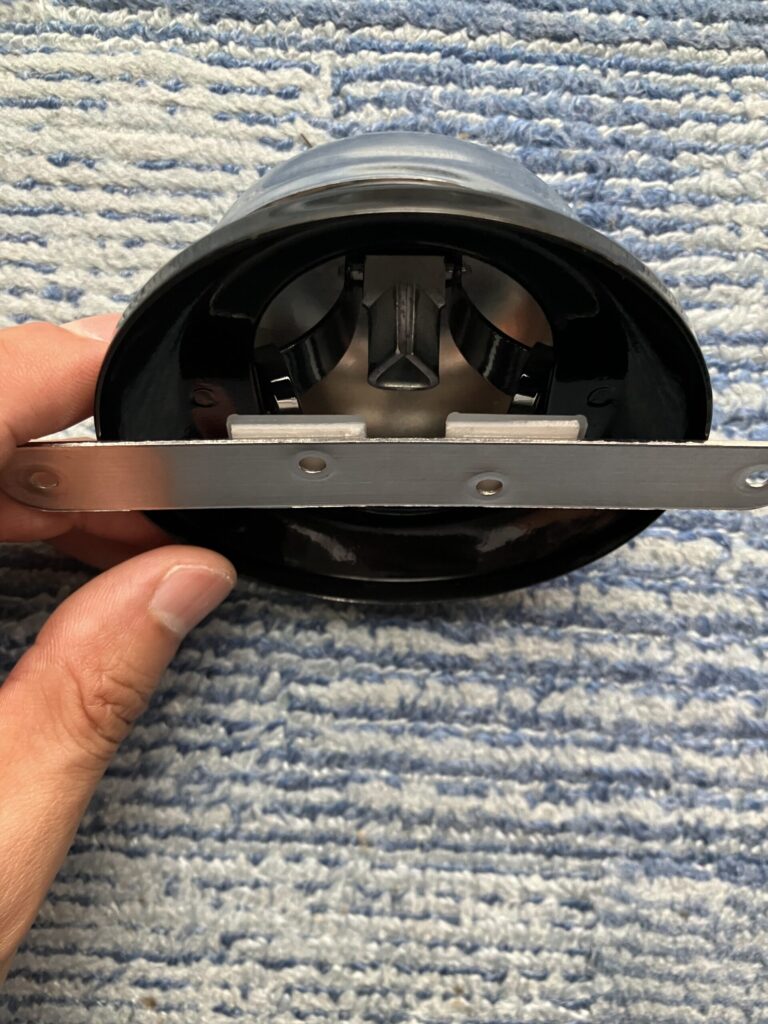
I often use the mounting base and tie wraps when I make my pedalboard for guitar. I wipe the metal plate with alcohol and attach the mounting base. After that, the call bell is fixed to the mounting base like the picture below. Actually, This method has a disadvantage. The adhesive on the mounting base tends to weaken over time, especially in hot environments.
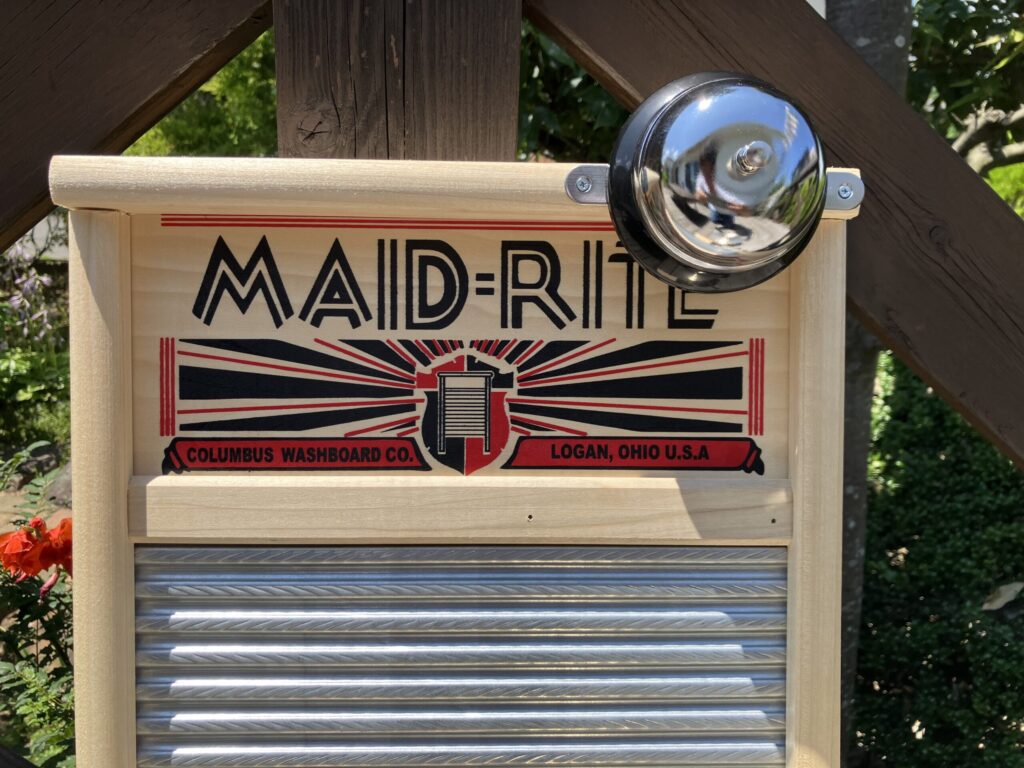
I asked the staff at my local music store to drill four holes in the washboard. 2 of them are on the top of the washboard like the picture below. This position leaves enough room to strike the wooden block below the bell.
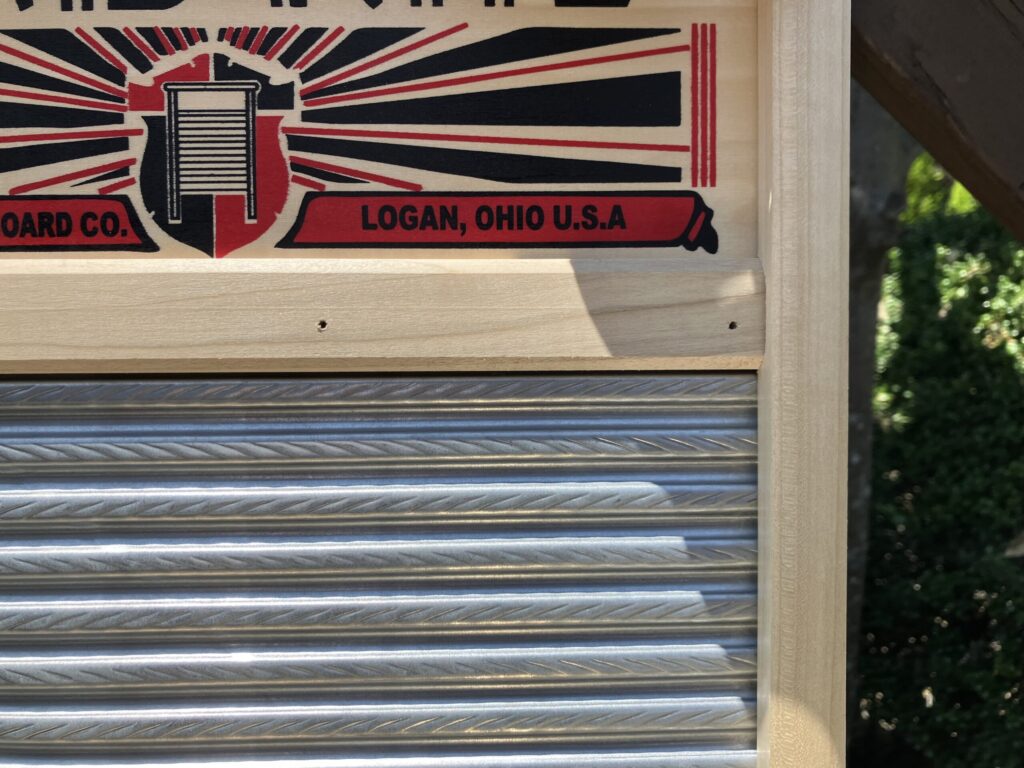
The other holes are under the wood board like the picture below. I think this place is standard to put tha call bell. If I find a smaller one, I will try to add the call bell.
Wood Temple Block
Next is the Meinl Percussion Wood Temple Block, C6 (TMWB-S).
I really like the sound of this instrument. It produces a pleasant wooden tone, and even when played with a thimble, it has a clear and satisfying resonance.
To mount it on the washboard, I first removed the original mounting hardware and reinstalled it from the inside. This keeps the overall setup more compact. The only downside is that the Meinl logo is no longer visible.
To attach it to the washboard without drilling additional holes, I used a PLAYTECH PCBH Cowbell Holder from Sound House. It is inexpensive and works surprisingly well for this purpose.
SABIAN AA Splash 8
Next is the SABIAN AA Splash 8.
I originally went to my local music store looking for a 6-inch cymbal. Unfortunately, they didn’t have one in stock, but they did have this 8-inch SABIAN AA Splash.
When I checked the price, it was more expensive than I had expected. However, the staff told me it was still being sold at the old price, so I decided to buy it. Even so, it ended up costing more than I had planned.
I don’t have much experience with different cymbals, so I can’t make a detailed comparison. However, this splash cymbal responds well even when played with a thimble, and it produces enough sustain to be used almost like a miniature ride cymbal.
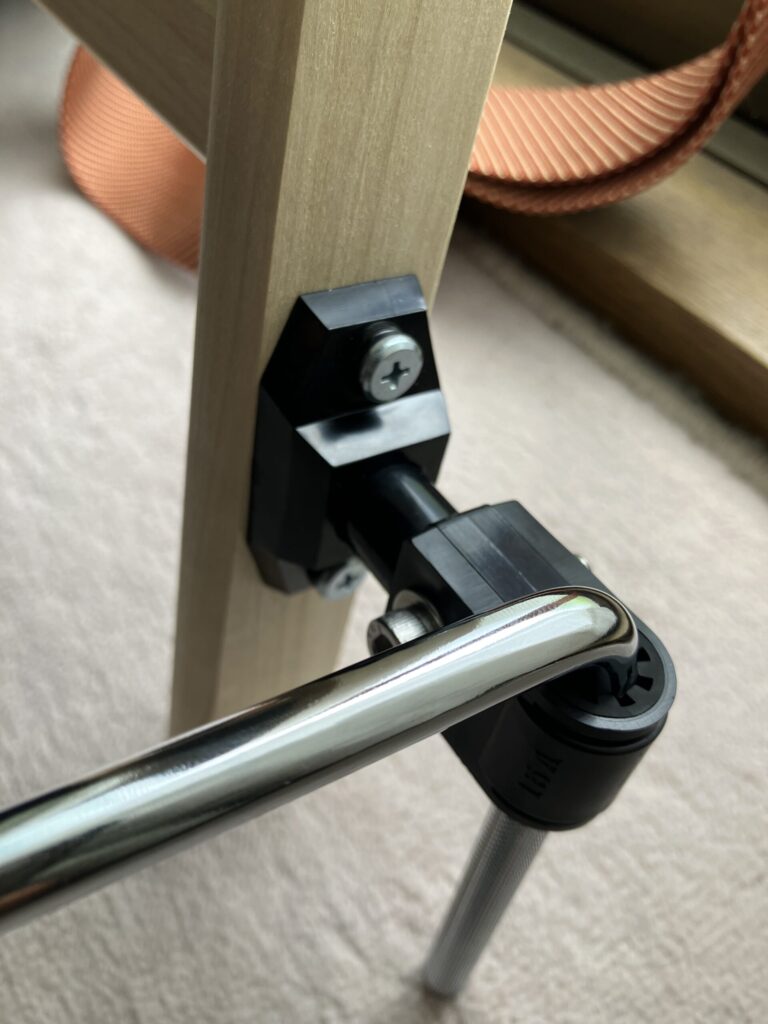
For the mounting hardware, I used a MEINL attachment together with a pipe clamp that I found on Amazon.
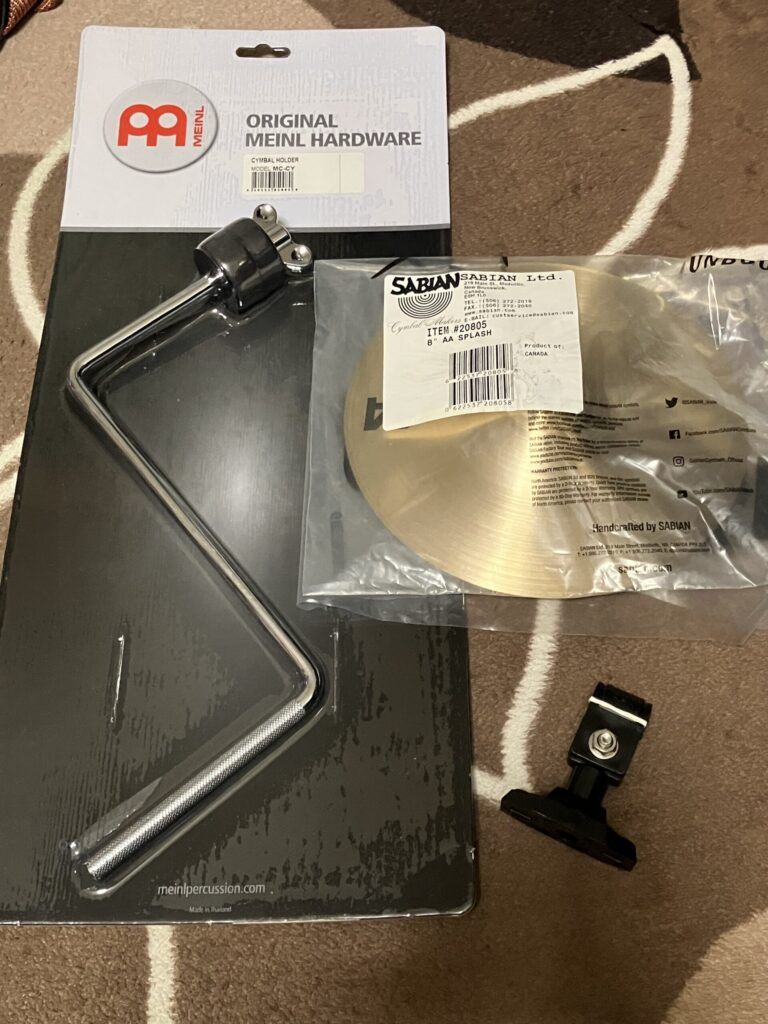
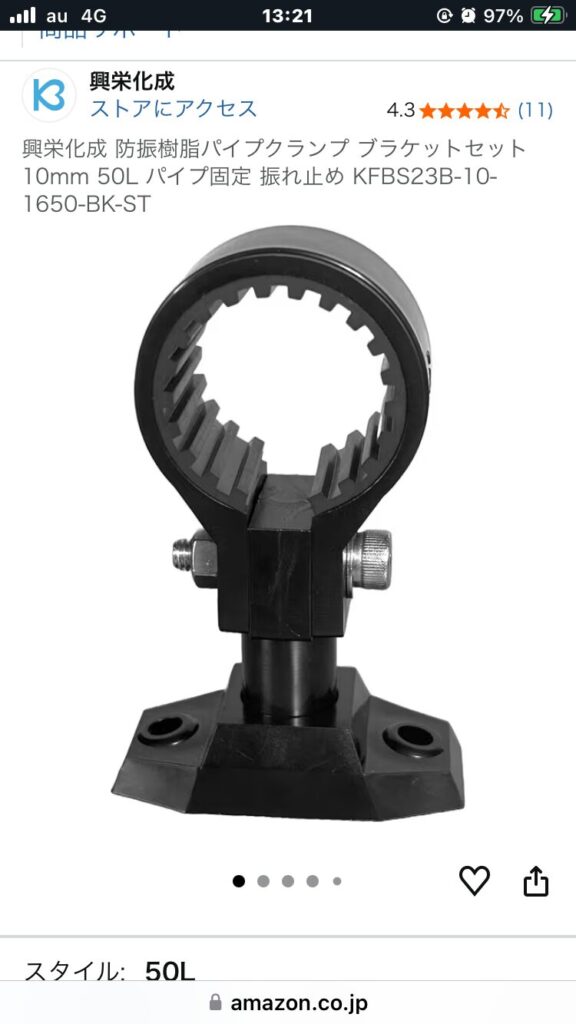
The pipe clamp is secured with screws. The instructions recommended fixing the angle with adhesive after adjustment, so I used a general-purpose adhesive for plastic parts.
So far, I have practiced with both the attachment and the splash cymbal installed, and everything has remained stable without any problems.
Final Thoughts
At this point, I have installed all the percussion instruments that I originally wanted on this washboard.
Since the washboard is supported by a shoulder strap and rests against my body, it is not particularly tiring to play. However, I do not want to make it any heavier, so I have no plans to add anything else.
The call bell was the final piece of the project. Once it was installed, the washboard finally looked like the classic washboard instruments that I had seen in videos and photos. That alone made me very happy.
Now all that remains is practice. I can already play the basic rhythms, but I would like to develop more interesting fills and variations in the future.
If you would like to learn more about the Jug Band I play with, please check out the article below.